Villanova Programming Team
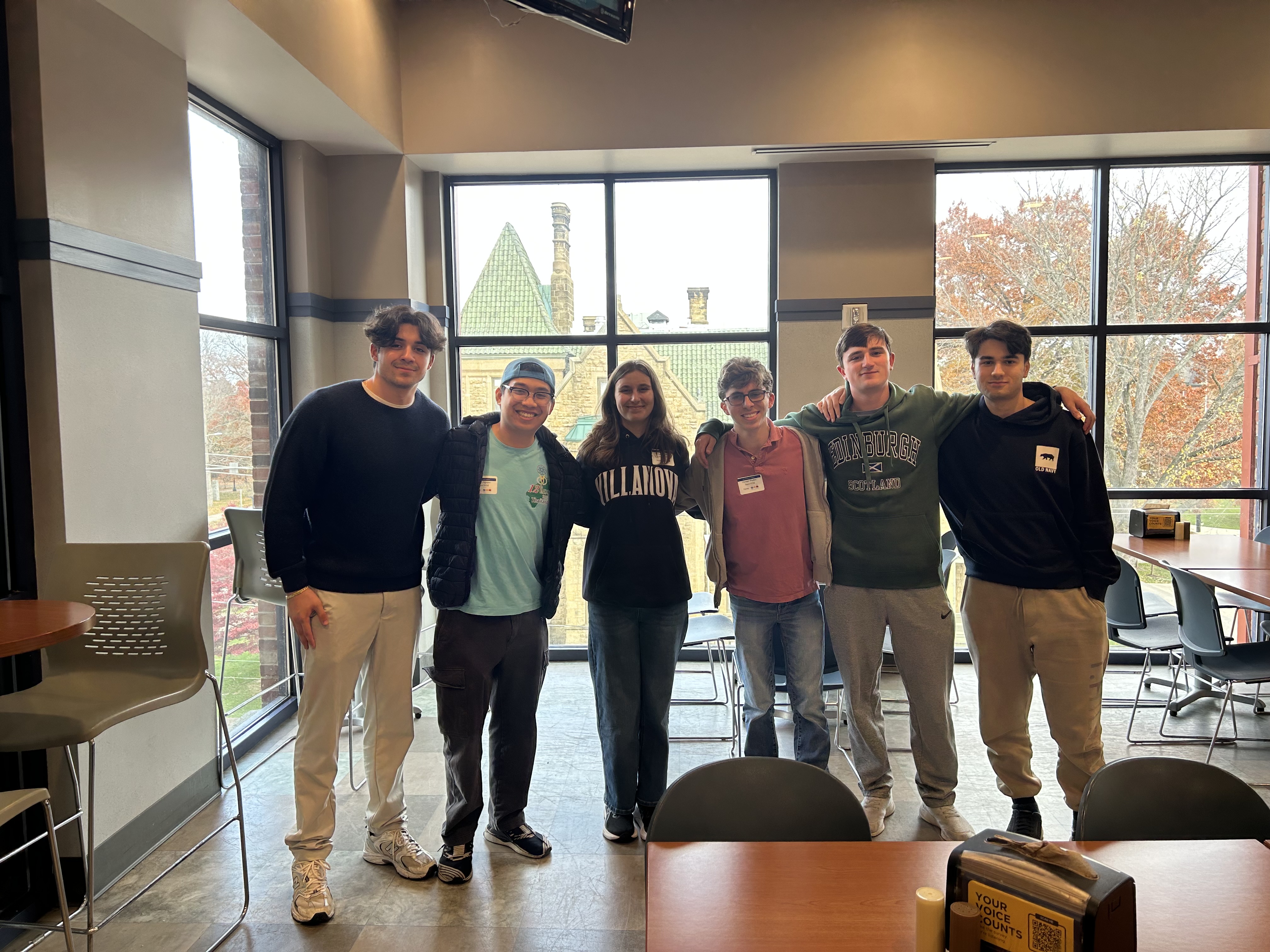
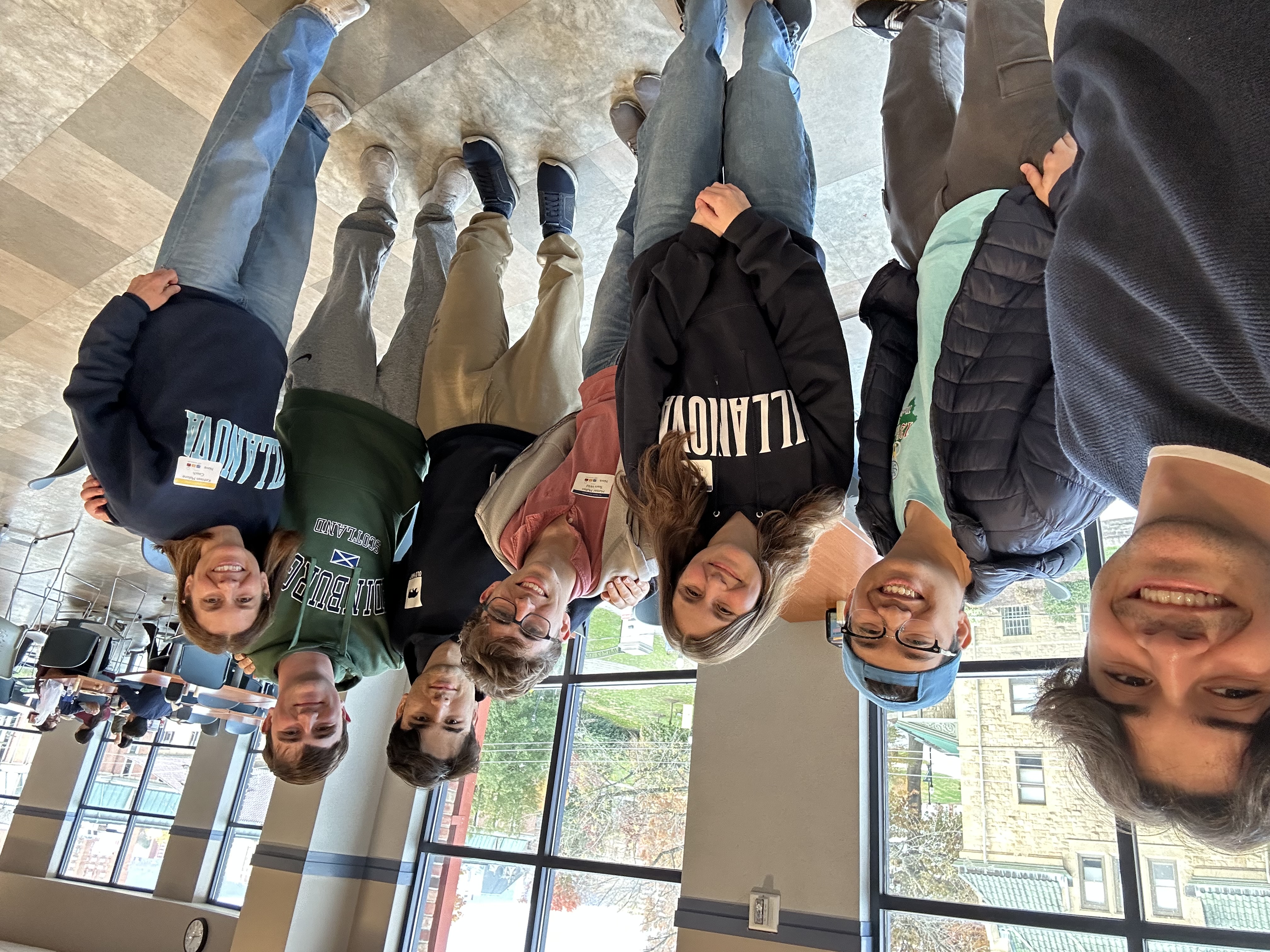
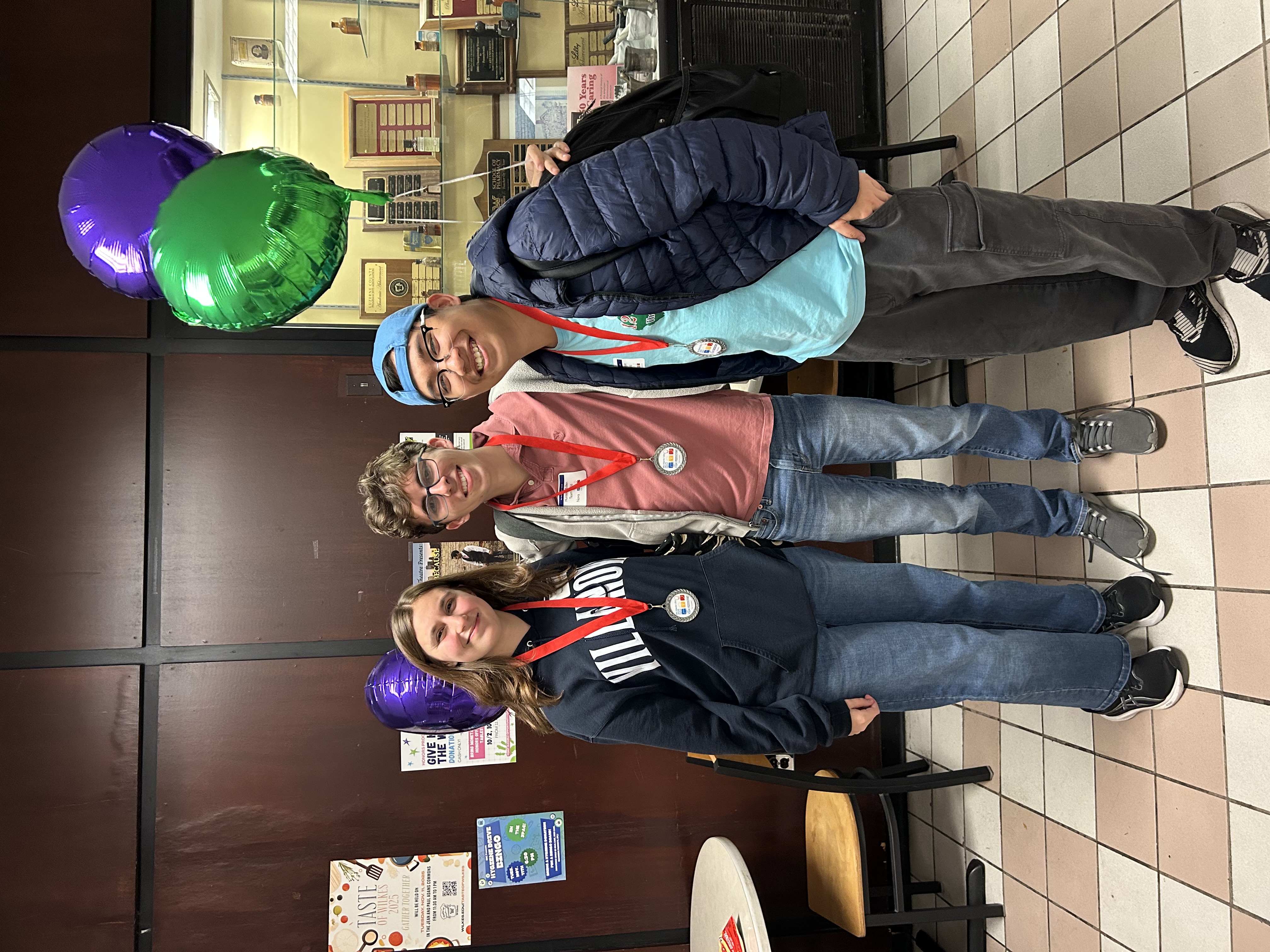
ICPC Mid-Atlantic Regionals 2025 at Wilkes University
The Programming Team is open to all Villanova students. Our weekly practices are a low-stress way to explore competitive programming, strengthen your problem-solving skills, and get exposure to the types of challenges that often appear in technical interviews.
Weekly Practice (Spring 2026)
This semester we will have two meeting options - Mondays at 5 with me and Tuesdays at 5 with your team captains - Rebecca Jackson and George Small. Both sessions are held in Mendel 290.
There is also an asynchronous option if you can't make the meetings. Each online session will have:
- A short recorded mini-lecture
- An example problem and solution
- A small problem set for you to practice on your own or with friends
What is Competitive Programming?
Competitive programming is like an academic sport for coders. If you’ve ever done math competitions in school, it’s a similar idea but with algorithms and code.
Each contest includes around 10–15 short algorithmic puzzles that teams solve within a fixed time limit, using the programming language of their choice. Students typically work in teams of three. Java and Python are popular for their readability, while C++ is often preferred by advanced competitors for its speed and efficiency.
Why Join the Programming Team?
- Sharpen your problem-solving skills. The more you practice, the cleaner, faster, and more efficient your code becomes.
- Learn advanced algorithms. As you tackle harder problems, you’ll deepen your understanding of graph traversal, recursion, and dynamic programming.
- Prepare for technical interviews. The skills you build here overlap directly with those tested in coding interviews at major tech companies.
- Boost your resume. Recruiters notice competitive programming experience especially ICPC. It highlights teamwork, logic, and real problem-solving skill.
Competitions We Attend
Local contests: Villanova competes annually in the CCSE Local Competition, usually in late October. It’s a great introduction, featuring 7–8 problems over 3 hours. We typically send two teams and often place among the top schools.
ICPC (International Collegiate Programming Contest): ICPC is a global contest for university programmers, with regional, national, and world rounds. Villanova belongs to the Mid-Atlantic Region and usually competes at Wilkes University in Wilkes-Barre, PA.
- Division 1 (D1) and Division 2 (D2) categories.
- D2 problems are slightly easier, but only D1 teams can qualify for nationals.
- Contests are hosted on Kattis.
Villanova has a strong record — 2nd place in D1 in 2024 and 2025, and 1st in D2 in 2024! Competing at ICPC Nationals is like training for a Division I sport. Even earning a site award is a big achievement and it’s a lot of fun.
Getting Started
- Visit kattis.com and try their “Hello World” problem: https://open.kattis.com/problems/hello
- Then try a problem that involves input: https://open.kattis.com/problems/hipphipphurra
Once you submit your code, Kattis will run a hidden test suite. A green check ✅ means your solution passed all tests!
Set Up Your IDE to Solve Kattis Problems
Kattis doesn’t provide detailed error messages, so the easiest way to debug is to write and test your code locally in your preferred IDE. You can simulate Kattis input by redirecting sys.stdin to a file while you test. Just remember to remove or comment out that redirection line before you submit your solution.
import sys
# Use this line while testing
# Comment out before submitting
sys.stdin = open('training.txt', 'r')

# Read input
abc = sys.stdin.readline().strip()
Here is an example for the problem above https://open.kattis.com/problems/hipphipphurra
First, create test.txt and put the input from kattis into it.
Arnar
3
Now write your code to solve the problem, reading the input from test.txt.
import sys
# Use this line while testing
# Comment out before submitting
sys.stdin = open('test.txt', 'r')

# Read input
name = sys.stdin.readline().strip()
age = sys.stdin.readline().strip()
for i in range(age):
    print("Hipp hipp hurra, "+name +"!")
VS Code for Python
Eclipse for Java
Common Kattis Input Patterns
Unlike other coding sites like LeetCode or HackerRank, Kattis requires you to explicitly read all input from standard input before you can start solving the problem. Every Kattis problem provides its data through input, and your code must parse that input correctly or it won’t run. During contests, you want this process to feel automatic so you can move quickly and focus on the logic rather than the setup. Below are some of the most common input patterns you’ll see on Kattis and examples of how to read each one.
import sys
# Comment out before submitting
sys.stdin = open('test.txt', 'r')

# Single integer
n = int(sys.stdin.readline())

# Two integers on one line
m, n = map(int, sys.stdin.readline().split())

# List of integers on one line
bats = [int(x) for x in sys.stdin.readline().split()]

# Integers line by line
lst = []
for _ in range(n):
    lst.append(int(sys.stdin.readline()))

# Fixed number of test cases
q = int(sys.stdin.readline())
for _ in range(q):
    n = int(sys.stdin.readline())

# Unknown number of input lines
for line in sys.stdin:
    # process each line
passGo
Final Thoughts
Competitive programming is fun, challenging, and rewarding. You’ll grow as a programmer, build friendships, and gain confidence solving tough problems under pressure.